The house is a well preserved row house from 1892, and the bathroom is new to its top floor, a level that had never carried water. Establishing it meant taking services up through the full height of the building, and the client's wish for a freestanding bath meant reinforcing the floor beneath it to carry the weight.
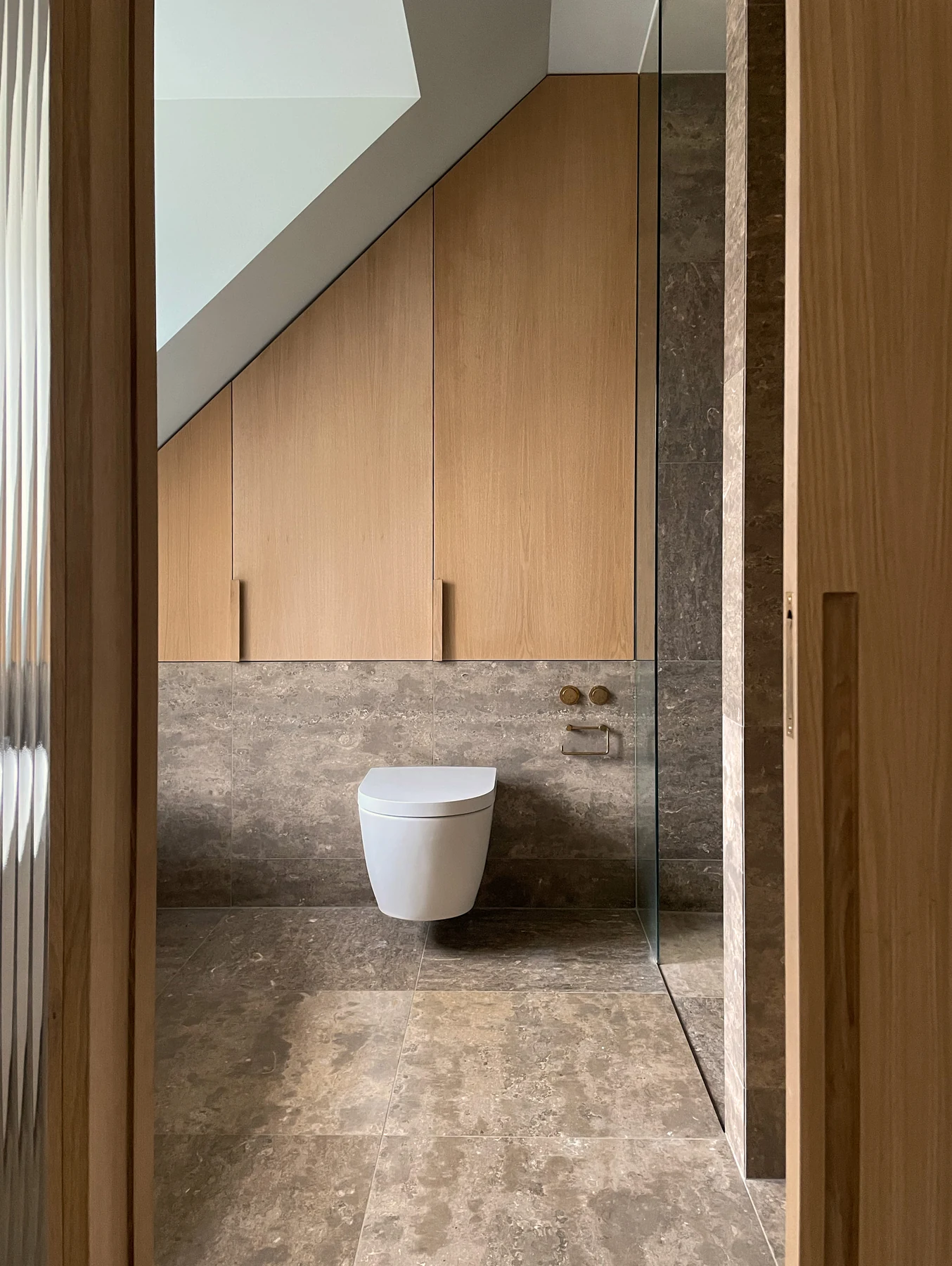
Under the slope of the roof, bathroom and master bedroom are drawn together by a single joinery solution. Oiled oak, Wachenzeller stone, reeded glass and brass are held to one palette, so that storage, doors and thresholds read as part of the room rather than as fittings placed within it, function slipping quietly into the space instead of announcing itself.
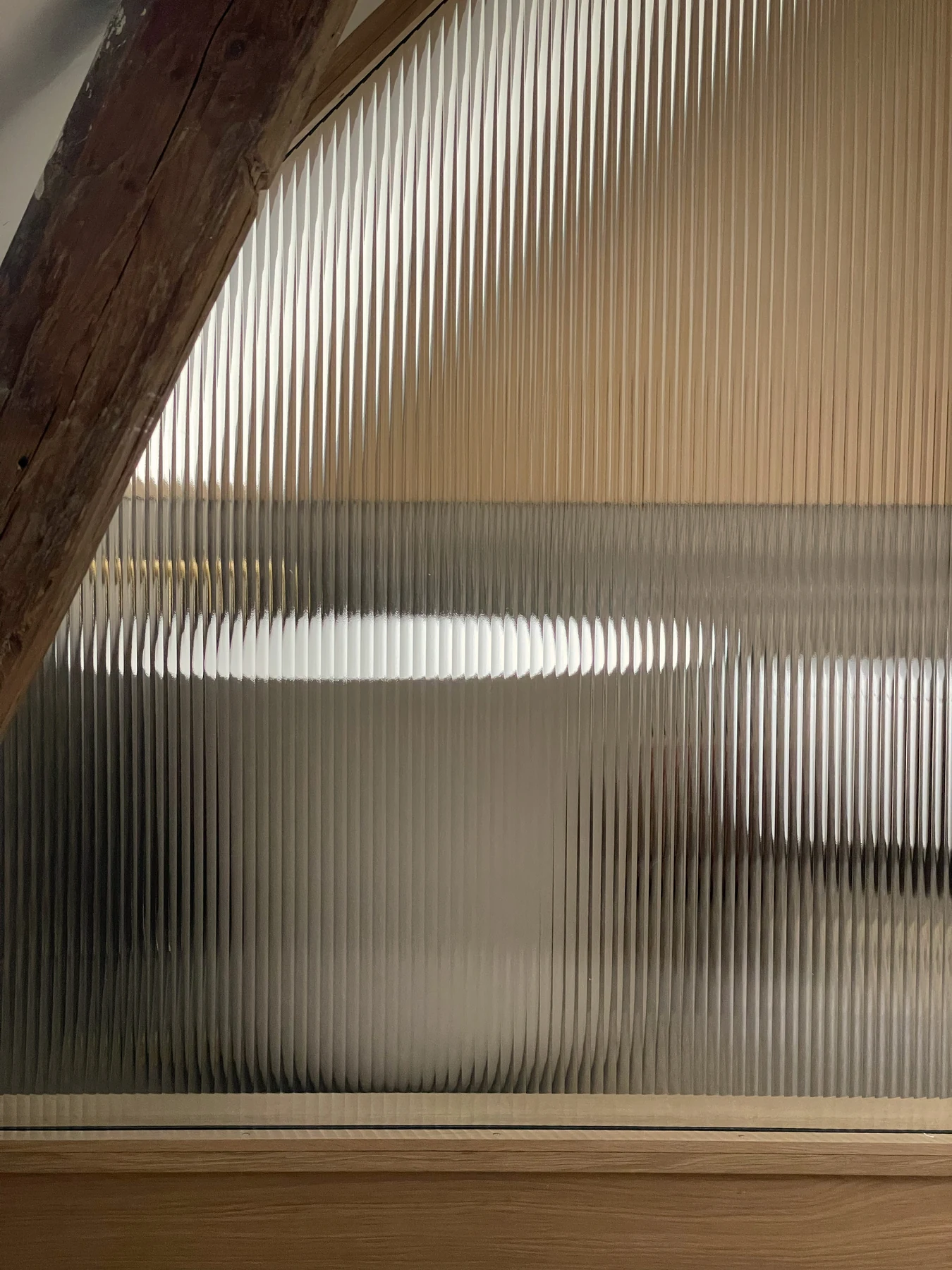
Reeded glass lets light move between the bathroom and master bedroom without opening one fully to the other, keeping it flowing beneath the sloped ceiling. Set in oak frames, it keeps the floor reading as a whole while giving the bathroom its own quiet, softening whatever passes behind it into shape and shadow. Where it meets the building's original timber beam, the new work sits against the old without pretending to be it.
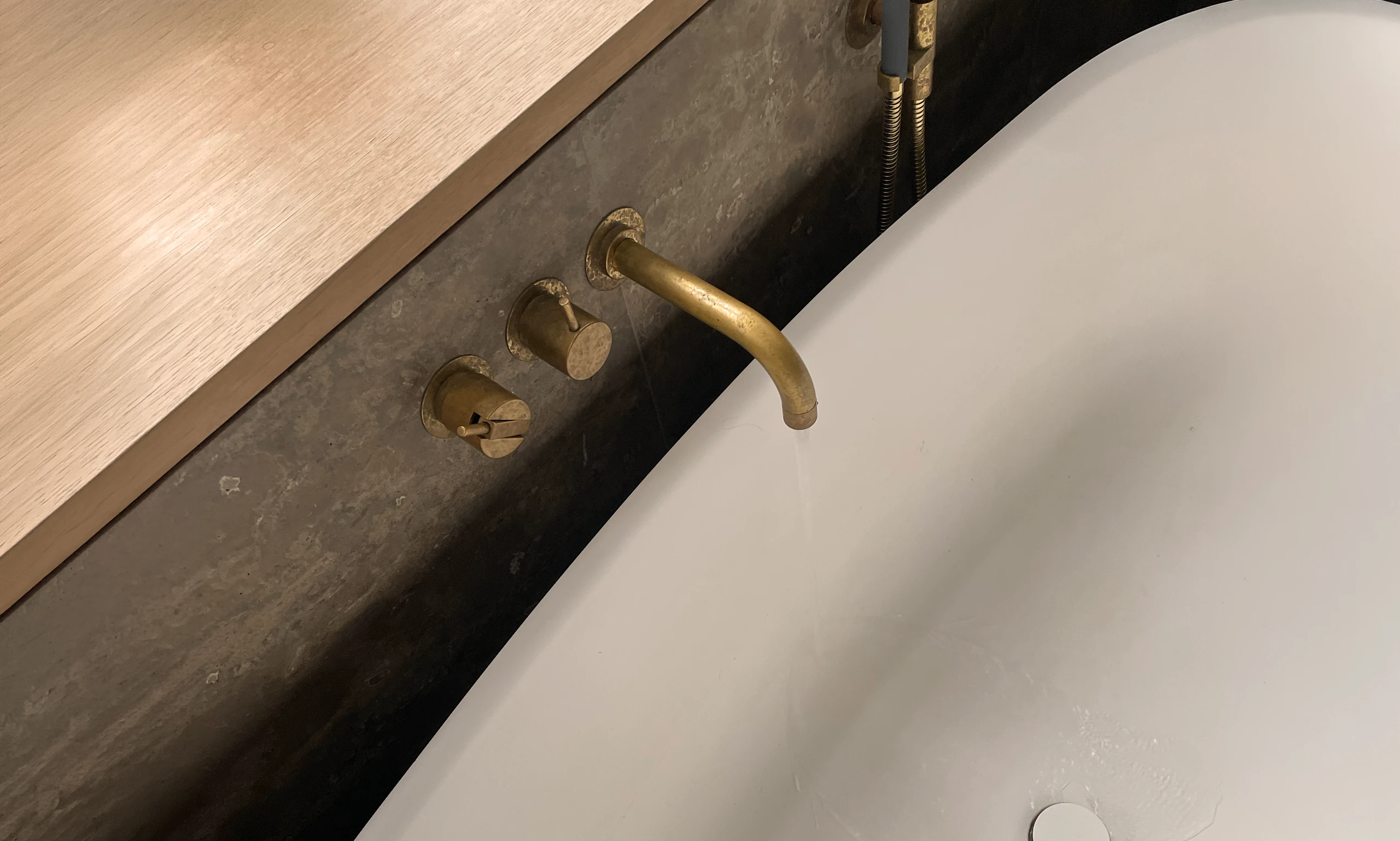
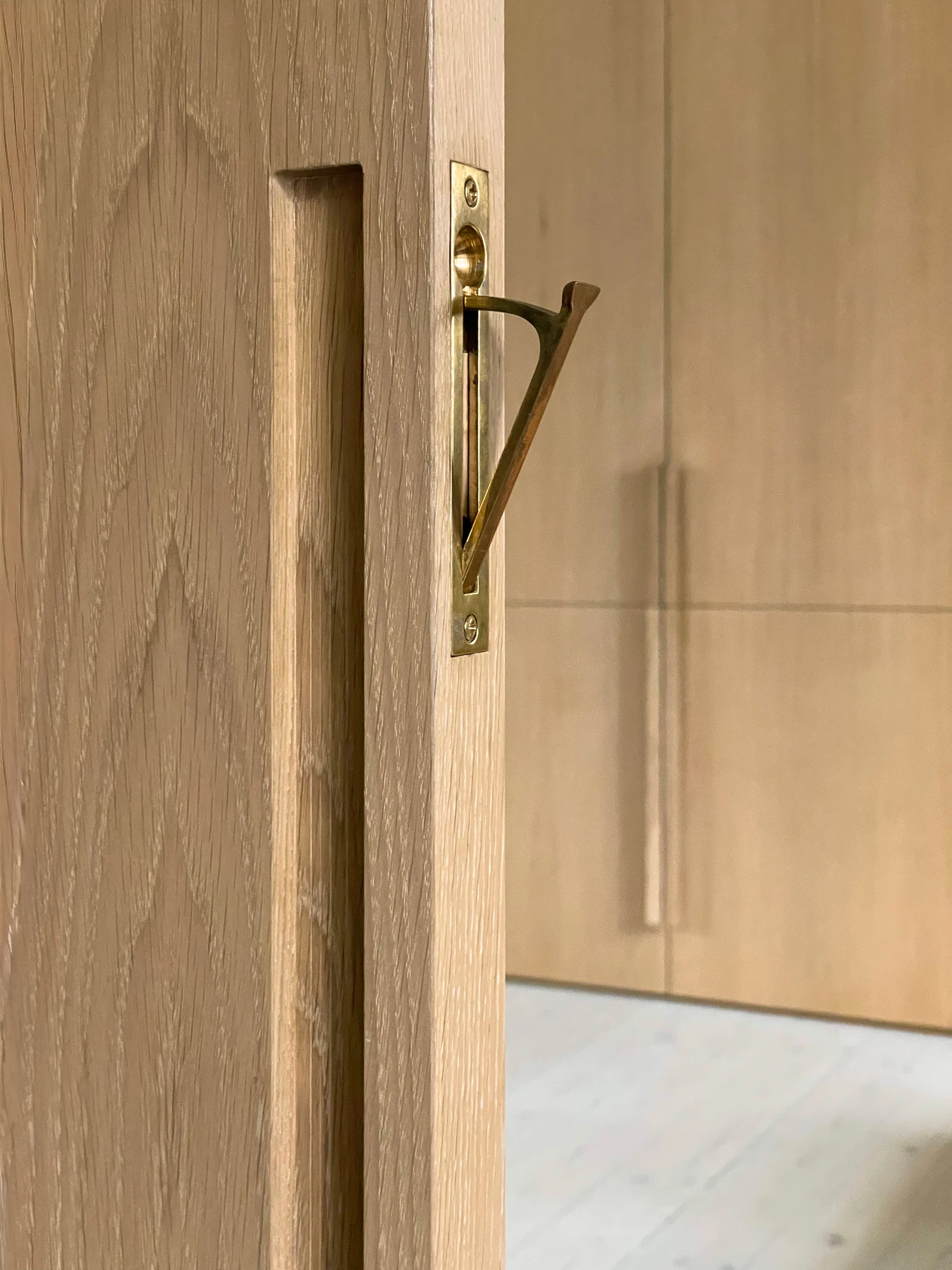
The Wachenzeller stone runs across floor, walls and the shower niche, its fossil veining giving the room depth and a sense of weight. Against its coolness, unlacquered brass warms every point the hand meets — the tap, the shower, the door handles — and will take on a patina with use.
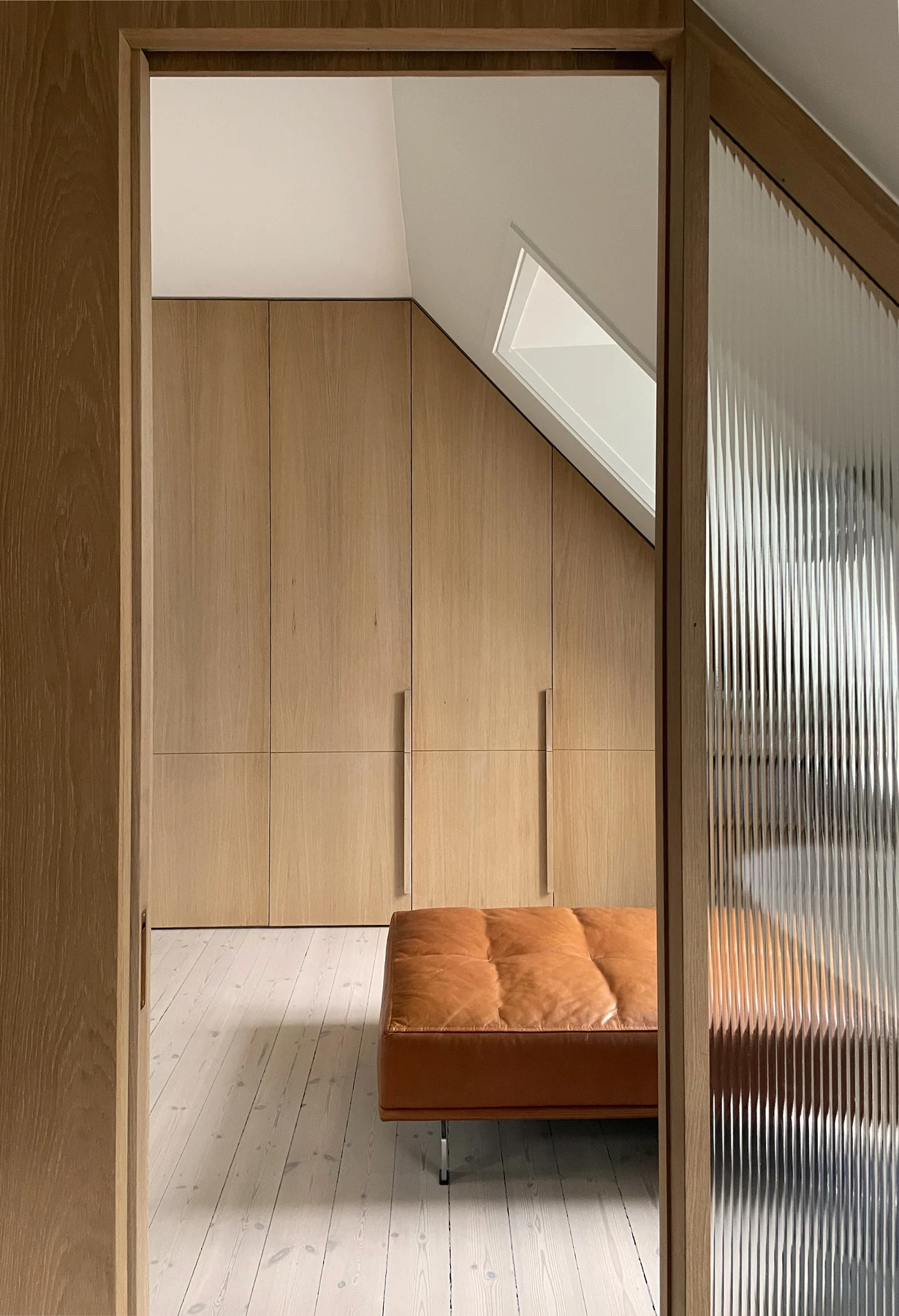
Oak, stone, glass and brass, held to a single palette, so that function slips quietly into the room.
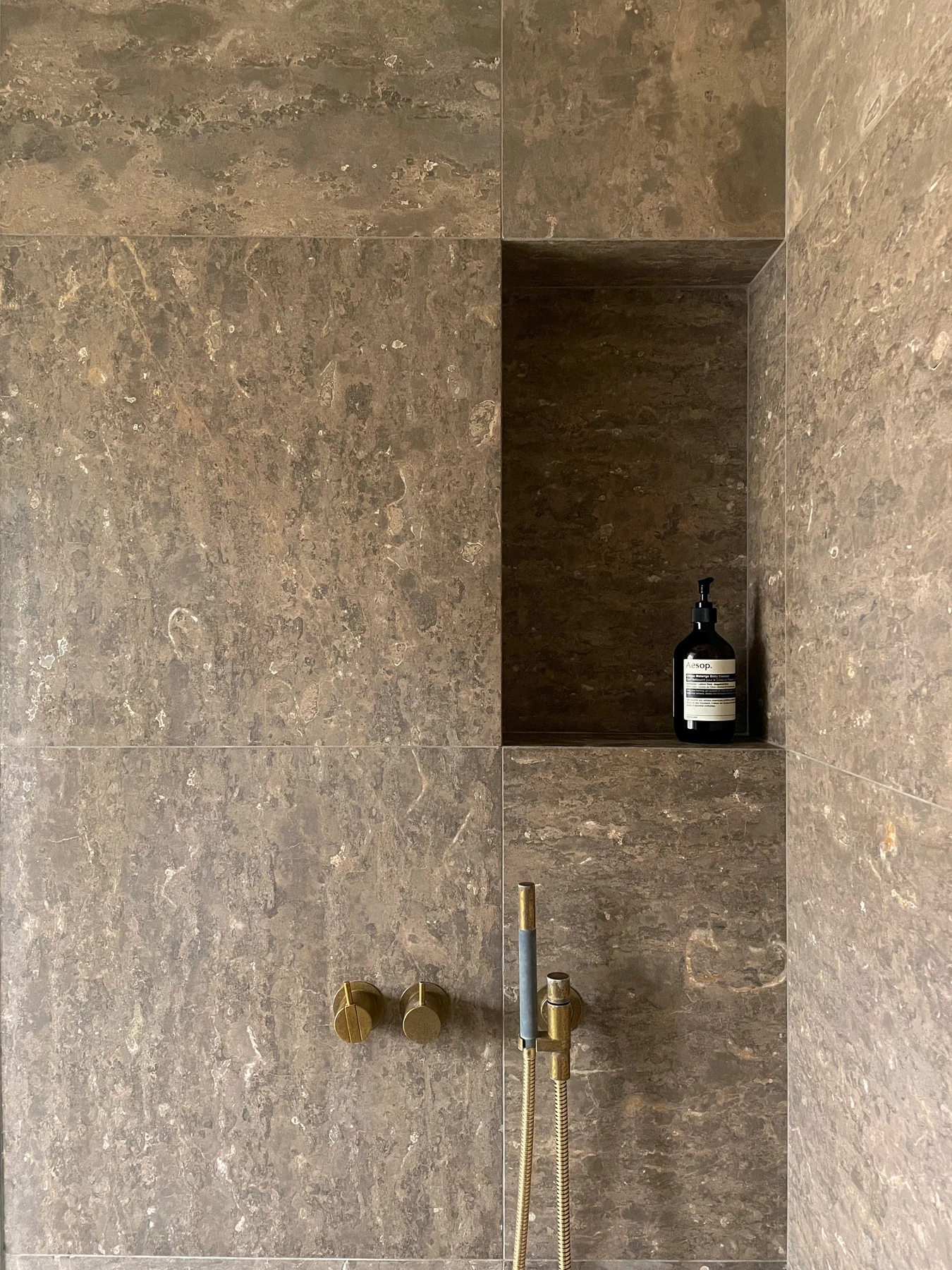
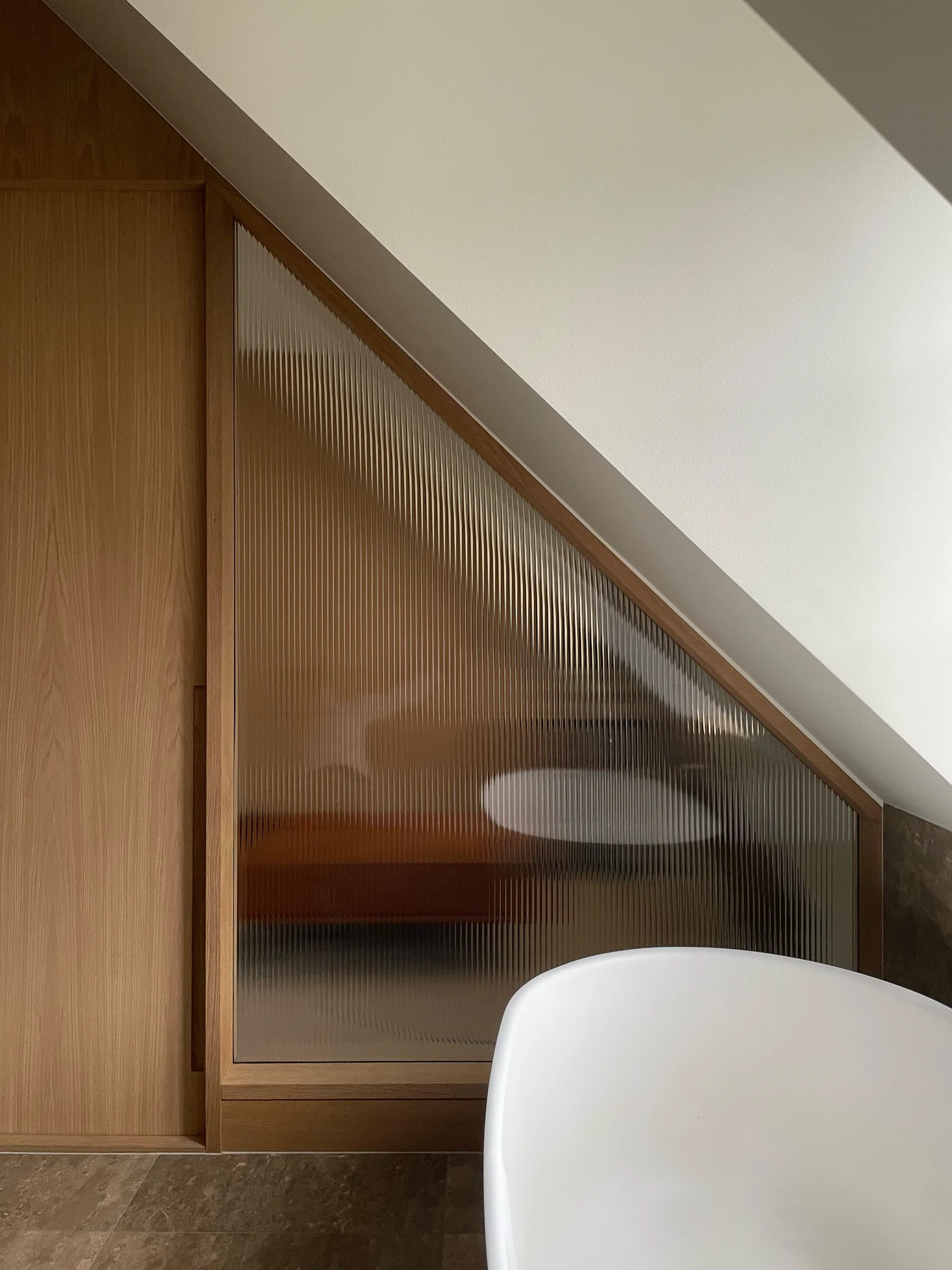
Reeded glass lets light move between the rooms without opening one fully to the other.